- Gianluca Fratta
Comics in Japan since the 70-2000
Year: 2005
pp. 192 18.00 Euro
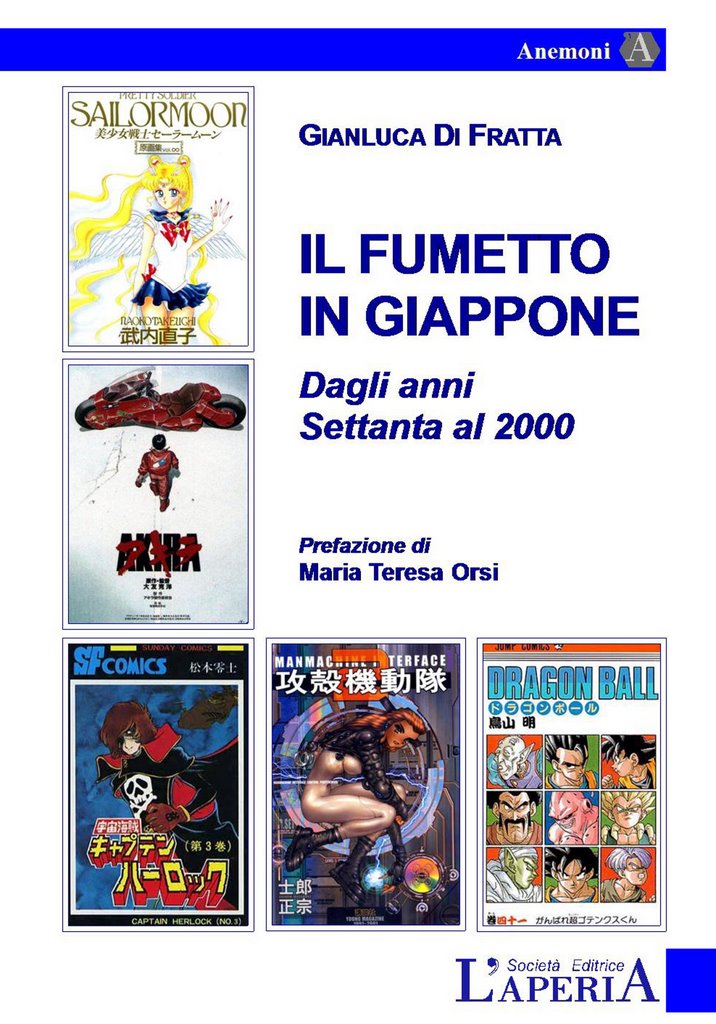
The book: From the second half of the nineties, following a gradual invasion of the Japanese comic book, our country has started to make the first attempts at analyzes manga from a scientific point of view. Most often, however, it was sociological studies on the implications of the comic in Italian culture. Little or nothing in these works, from the cultural and historical implications of the Japanese manga in society of Japan, and even where one attempts a historiographical and literary comics, has offered a framework based on a reflection occidentalistica rather than on an understanding of the phenomenon through its elements of Japanese culture. The need to respond to a nonfiction oriental westernisation on manga comes from the need to provide an adequate means of reading an issue inseparable from the culture of Japan through historical and literary analysis of some of the most important productions of gender and their cultural interference in contemporary Japanese society. From Go Nagai Yamato Waki, by Rumiko Takahashi to Akira Toriyama, Katsuhiro Otomo from a Takeuchi Naoko, a journey of the main stages of development of comics in Japan and the transformation it has undergone in its evolution from the late seventies to the present day.
Notes: The book uses a foreword by Maria Teresa Orsi and is accompanied by an extensive appendix containing a complete index of the Italian editions of manga published in Japan from 1976 to 2004. The text was nominated to the Franco Fossati Prize 2006.
the author: Gianluca Di Fratta, orientalist, deals with history and culture of Japanese comics and animated films on which he wrote essays and articles in scientific journals and sectoral. It is the creator and curator of the heading "Books on TV" for the weekly "The Cafe" and is a consultant for the Japan International Comics and Animation "Napoli Comicon. Currently conducts research at the Faculty of Oriental Studies, University of Rome "La Sapienza" where he also lectures on manga and anime . Since 2002 he is member of the Italian Association for Japanese Studies.


0 comments:
Post a Comment